

Why Your Body Feels Heavy When You’re Emotionally Tired

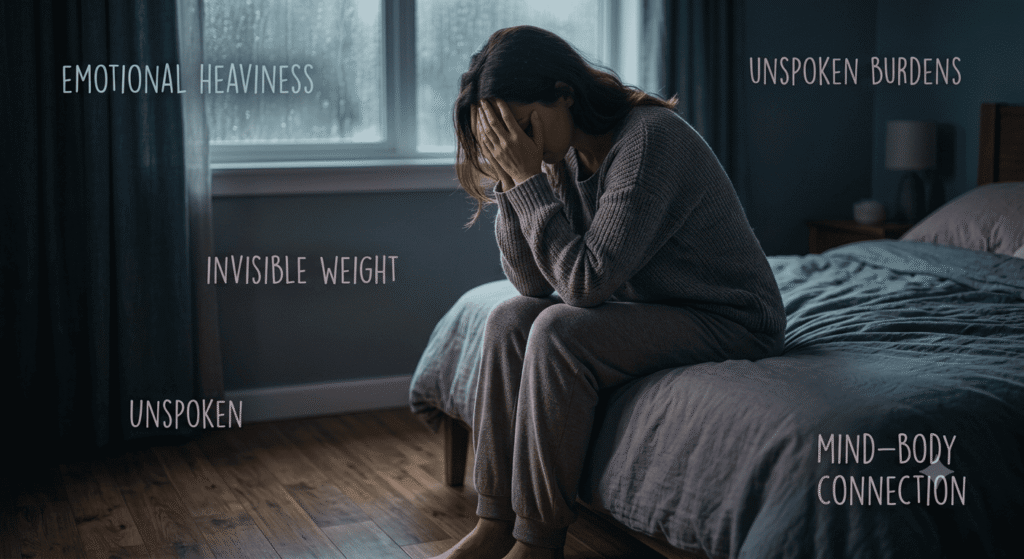
Introduction: When Your Body Feels Tired, But You Can’t Explain Why
“I’ve rested… so why do I still feel exhausted?”
Have you ever woken up after a full night’s sleep and still felt like you had no energy?
Simple tasks feel overwhelming. Walking across the room feels like effort. Even getting out of bed seems harder than usual.
You tell yourself to “push through,” but your body feels unusually heavy.
Many people immediately assume something is physically wrong. While it’s always important to rule out medical causes, there are times when the body is not simply tired—it is emotionally exhausted.
The body often carries what the heart has been silently holding.
Understanding the Mind-Body Connection
Your emotions don’t stay only in your mind
We often think of emotions as something we experience mentally.
But emotions affect the entire body.
When you’re happy, you naturally feel lighter and more energetic.
When you’re anxious, your heart beats faster.
When you’re scared, your muscles tighten.
In the same way, prolonged emotional stress can leave your body feeling heavy, slow, and fatigued.
Your body is constantly responding to what your mind is experiencing.
Emotional energy is just as important as physical energy
Every day, your mind spends energy processing thoughts, making decisions, managing relationships, suppressing emotions, and coping with stress.
When this emotional energy becomes depleted, your body begins to feel the effects—even if you haven’t done much physically.
What Does Emotional Tiredness Feel Like?
It goes beyond ordinary fatigue
Emotional tiredness isn’t simply feeling sleepy.
It often feels like carrying an invisible weight.
You may notice that:
- You wake up without feeling refreshed.
- Everyday tasks seem unusually difficult.
- Your motivation has disappeared.
- You feel emotionally “flat.”
- Even enjoyable activities feel exhausting.
It’s not that you don’t want to do things.
You simply don’t feel like you have the energy.
Why Emotional Stress Makes the Body Feel Heavy
Your nervous system stays switched on
When you experience ongoing stress, worry, emotional pain, or unresolved feelings, your nervous system remains alert.
Instead of moving between periods of activity and rest, it stays in a state of constant readiness.
Over time, this drains your physical and emotional resources.
Carrying emotions requires energy
Many people spend years carrying:
- unspoken feelings
- grief
- disappointment
- guilt
- fear
- pressure
- responsibility
Even if these emotions are not visible, your body continues carrying them.
Just as carrying a heavy backpack all day causes physical fatigue, carrying emotional burdens creates emotional fatigue that the body eventually begins to feel.
Signs Your Body May Be Emotionally Tired
Physical symptoms
Emotional exhaustion can contribute to:
- heaviness throughout the body
- constant fatigue
- headaches
- muscle tightness
- poor sleep quality
- digestive discomfort
- low energy
- body aches without obvious physical causes
Emotional symptoms
Alongside physical heaviness, you may also experience:
- feeling emotionally numb
- difficulty concentrating
- irritability
- lack of motivation
- feeling disconnected from yourself
- reduced interest in daily life
The body and emotions often move together.
Why Rest Doesn’t Always Solve the Problem
Physical rest cannot always relieve emotional exhaustion
Many people believe more sleep will solve everything.
Sometimes it helps.
Sometimes it doesn’t.
You can rest your body for hours while your mind continues:
- overthinking
- worrying
- replaying conversations
- suppressing emotions
- planning for every possible outcome
Your body may be lying still, but your nervous system is still working.
That is why emotional tiredness often remains even after resting.
Hidden Emotional Patterns That Create Heaviness
Suppressed emotions
When feelings are repeatedly ignored, they don’t disappear.
Instead, they often become emotional tension stored within the body.
Being strong for everyone
Many people spend years taking care of others while ignoring themselves.
They become the supporter.
The listener.
The problem-solver.
Eventually, the emotional load becomes too heavy.
Living under constant pressure
Even when life appears stable, ongoing internal pressure can quietly drain emotional energy.
The pressure to succeed.
To be perfect.
To stay positive.
To never disappoint anyone.
All of these consume energy.
How Emotional Healing Can Help
Understanding what your body is trying to communicate
Instead of seeing heaviness as something to fight, emotional healing encourages you to become curious.
What is your body trying to tell you?
What emotions have you been carrying?
What have you been ignoring?
Sometimes, the body speaks because the heart has remained silent for too long.
Releasing emotional weight
Emotional healing can help you:
- reconnect with your emotions
- release accumulated emotional pressure
- calm the nervous system
- restore emotional balance
- gradually feel lighter from within
Healing doesn’t happen by forcing yourself to feel better.
It begins by giving yourself permission to stop carrying everything alone.
Small Daily Practices That Can Help
Listen before you push
Instead of asking,
“Why am I so lazy?”
Ask,
“What is making me feel so heavy today?”
Create moments of emotional release
Writing, talking, crying, praying, or spending quiet time with yourself can help release emotional pressure.
Prioritize nervous system recovery
Gentle breathing exercises, mindful walks, stretching, or simply sitting in silence can help your body shift out of constant alertness.
Be kinder to yourself
Not every day needs to be productive.
Sometimes healing itself is enough.
Final Thoughts: Your Body May Be Asking for Compassion, Not More Pressure
A heavy body is not always a sign of physical weakness.
Sometimes, it is carrying emotional burdens that have gone unnoticed for far too long.
If you constantly feel drained without understanding why, don’t immediately judge yourself.
Pause.
Listen.
Your body may not be asking you to work harder.
It may simply be asking you to slow down, acknowledge what you’re carrying, and allow yourself to heal.
Because when emotional weight begins to lift, the body often follows.
FAQs
1. Why does my body feel heavy even when I’m healthy?
Emotional stress may be contributing
Long-term emotional stress, anxiety, burnout, or unresolved emotions can leave your body feeling heavy even when there is no obvious physical illness. If symptoms persist, consult a healthcare professional to rule out medical causes.
2. Can emotions really affect physical energy?
Yes, emotions influence the body
The mind and body are closely connected. Emotional exhaustion can affect sleep, muscle tension, motivation, and overall energy levels.
3. Why do I still feel tired after sleeping?
Your mind may still be working
If you’re emotionally stressed, your nervous system may remain active even during sleep, leaving you feeling unrefreshed.
4. Is body heaviness a symptom of emotional burnout?
It can be
Emotional burnout often causes fatigue, heaviness, lack of motivation, and mental exhaustion. However, these symptoms can also have medical causes, so persistent or severe symptoms should be evaluated by a healthcare provider.
5. How can emotional healing help?
It helps reduce emotional burden
Emotional healing focuses on understanding and releasing accumulated emotional stress, helping restore inner balance and reduce emotional exhaustion.
6. When should I seek professional help?
Don’t ignore ongoing symptoms
If your fatigue, body heaviness, or emotional distress continues for weeks, interferes with daily life, or is accompanied by concerning physical symptoms, it’s important to seek guidance from a qualified healthcare or mental health professional. Emotional healing can complement—but not replace—appropriate medical care.
Leave a Reply