

Difference Between Suppressing and Processing Emotions

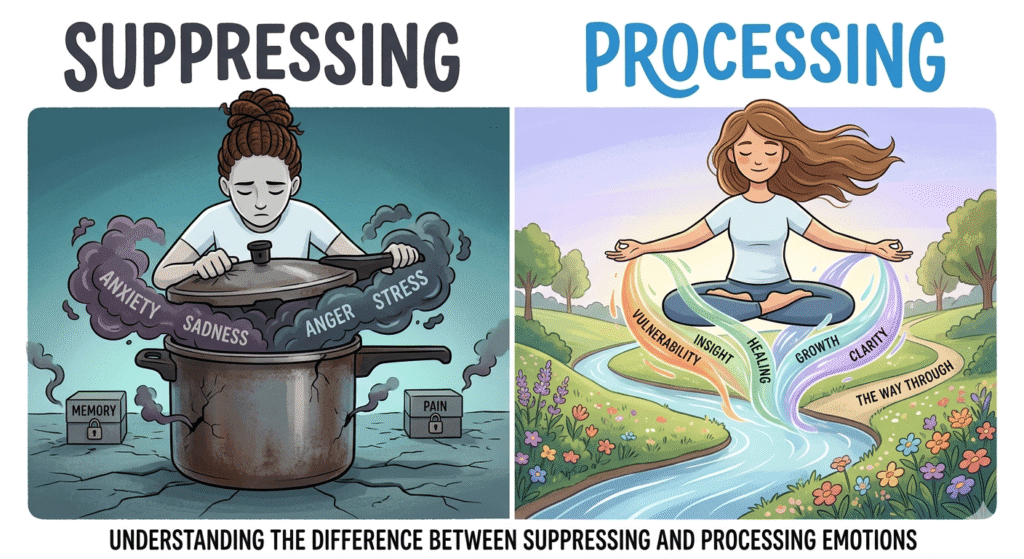
Introduction: Why Emotions Do Not Simply Disappear
“I’m fine” is not always the truth
Many people learn to hide what they feel.
They stay quiet during difficult moments.
They avoid expressing hurt.
They distract themselves instead of dealing with emotions.
From the outside, it may look like they are handling things well.
But inside, the emotions remain unresolved.
Emotions need attention, not avoidance
One of the biggest misunderstandings about emotions is this:
Ignoring emotions is not the same as healing them.
What we suppress internally often stays within us for much longer than we realize.
That is why it becomes important to understand the difference between suppressing emotions and processing emotions.
What Does It Mean to Suppress Emotions?
Pushing feelings away
Suppressing emotions means avoiding, hiding, or controlling what you truly feel.
Instead of expressing emotions, a person may:
- stay silent
- pretend everything is okay
- distract themselves constantly
- avoid emotional conversations
- force themselves to “move on” quickly
The emotion is not resolved.
It is simply pushed deeper inside.
Why people suppress emotions
Many people suppress emotions because they:
- fear conflict
- don’t want to burden others
- fear rejection or judgment
- were taught not to express emotions
- believe emotions are weakness
Over time, suppression becomes a habit.
A person may stop expressing emotions so often that they lose touch with what they truly feel.
What Does It Mean to Process Emotions?
Allowing yourself to feel
Processing emotions means acknowledging, understanding, and safely expressing what you feel instead of avoiding it.
It does not mean reacting impulsively or becoming emotionally overwhelmed.
It simply means giving your emotions space instead of denying them.
Processing creates release
When emotions are processed, they move through the system naturally.
A person may:
- identify what they are feeling
- understand why they feel that way
- express emotions safely
- reflect instead of suppress
- release emotional tension gradually
Processing helps emotions settle instead of remaining stuck inside.
The Key Difference Between Suppressing and Processing
Suppression hides emotions
When emotions are suppressed:
- the feeling stays inside
- emotional tension builds up
- the body carries the stress
- the same emotions keep returning
The emotion is avoided, not healed.
Processing helps emotions move
When emotions are processed:
- the feeling is acknowledged
- emotional pressure reduces
- clarity increases
- the body relaxes gradually
The emotion is understood instead of resisted.
How Suppressed Emotions Affect the Mind and Body
Emotional effects
Suppressed emotions often create:
- overthinking
- irritability
- emotional numbness
- sudden emotional outbursts
- anxiety or inner heaviness
A person may feel emotionally tired without understanding why.
Physical effects
The body also responds to emotional suppression.
This may show up as:
- headaches
- acidity or digestive discomfort
- chest tightness
- disturbed sleep
- body heaviness
- muscle tension
- unexplained fatigue
The body often carries what the mind avoids.
Signs You May Be Suppressing Your Emotions
Common patterns
You may be suppressing emotions if you:
- say “I’m fine” when you are not
- avoid emotional conversations
- struggle to express feelings
- keep everything to yourself
- feel uncomfortable crying or opening up
- distract yourself constantly to avoid emotions
Feeling emotionally disconnected
Some people suppress emotions for so long that they stop understanding what they truly feel.
This can create emotional numbness and inner disconnection.
Signs You Are Processing Emotions in a Healthy Way
Emotional awareness
Healthy emotional processing often looks like:
- acknowledging your feelings honestly
- expressing emotions calmly
- allowing yourself to cry when needed
- talking about what hurts
- reflecting instead of reacting impulsively
Feeling lighter after expression
When emotions are processed, a person often feels lighter, calmer, and more emotionally balanced afterward.
Why Processing Emotions Feels Difficult
Many people were never taught how
In many environments, emotional expression is discouraged.
People hear things like:
- “Be strong.”
- “Don’t cry.”
- “Forget it and move on.”
- “You’re overreacting.”
So instead of learning emotional processing, many people learn emotional suppression.
Vulnerability feels unsafe
Opening up emotionally can feel uncomfortable, especially for people who fear judgment or rejection.
That is why emotional healing should feel safe and gentle.
How Emotional Healing Helps
Creating a safe emotional space
Emotional healing helps people reconnect with emotions they may have been suppressing for years.
It provides support to:
- understand emotions
- release emotional pressure
- feel safe expressing feelings
- reduce emotional heaviness
- restore emotional balance
Healing without emotional overwhelm
Processing emotions does not mean becoming emotionally out of control.
Healthy healing happens gradually.
Step by step.
Simple Ways to Start Processing Emotions
Pause and notice what you feel
Instead of ignoring emotions, ask yourself:
“What am I actually feeling right now?”
Express safely
Writing, talking, or guided emotional support can help.
Stop judging your emotions
Your feelings are not wrong. They are signals.
Allow emotions to move naturally
Not every emotion needs to be fixed immediately. Sometimes it simply needs to be felt.
Final Thoughts: Emotions Need Expression, Not Suppression
Suppressing emotions may feel easier in the moment.
But emotions that are ignored do not disappear.
They stay within the mind and body.
Processing emotions, on the other hand, creates space for healing.
It allows you to understand yourself better, feel lighter internally, and reconnect with your emotional balance.
So if you have been holding everything inside for a long time, maybe it is time to stop asking yourself to “stay strong” all the time.
Maybe it is time to simply feel… and heal.
FAQs
1. What is the difference between suppressing and processing emotions?
Suppressing avoids emotions, processing understands them
Suppressing emotions means hiding or avoiding feelings. Processing emotions means acknowledging and expressing them in a healthy way.
2. Is suppressing emotions harmful?
Long-term suppression can affect mental and physical health
Suppressed emotions may lead to stress, anxiety, emotional heaviness, and physical symptoms like headaches or fatigue.
3. How do I know if I suppress my emotions?
Common signs include emotional avoidance
You may avoid emotional conversations, say “I’m fine” often, or struggle to express what you truly feel.
4. What does healthy emotional processing look like?
Acknowledging and expressing emotions safely
Healthy processing involves understanding your emotions, expressing them calmly, and allowing yourself to feel without judgment.
5. Can emotional healing help with suppressed emotions?
Yes, it supports emotional release
Emotional healing helps reduce emotional pressure, improve self-awareness, and create emotional balance.
6. Why is it so hard to express emotions?
Fear and conditioning often play a role
Many people fear judgment, conflict, or rejection, while others were never taught healthy emotional expression.
Leave a Reply