
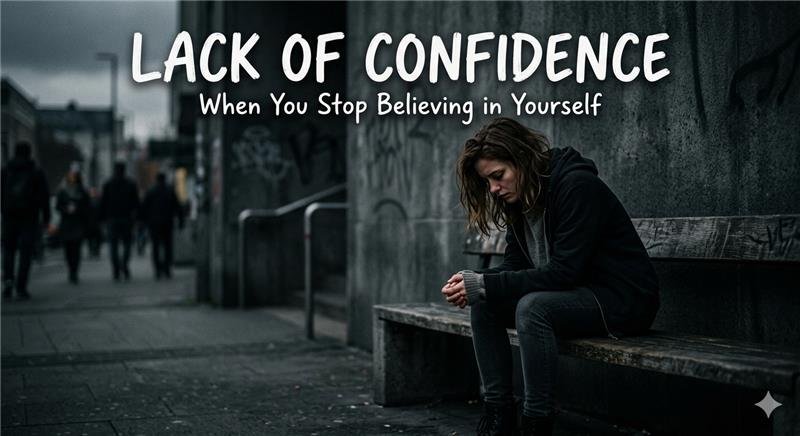
Lack of Confidence: When You Stop Believing in Yourself

Lack of Confidence: जब खुद पर विश्वास नहीं होता
Do you hesitate before starting something new… even when you want to try?
You may have the skills.
You may have the opportunity.
But something inside holds you back.
A small voice that says:
“What if I fail?”
“What if I’m not good enough?”
“What will others think?”
From the outside, it may not always be visible.
But inside, there is constant self-doubt.
This is what lack of confidence often feels like.
It doesn’t always stop you completely —
but it slows you down, makes you question yourself, and sometimes keeps you from even trying.
What Is Lack of Confidence?
Lack of confidence is not just about feeling shy or nervous.
It is a deeper pattern of not trusting your own abilities, decisions, or worth.
Even capable people can struggle with it.
Because confidence is not only about skills —
it is about belief.
When the belief in yourself is weak, even small steps can feel difficult.
Why Does Confidence Decrease?
Low confidence usually does not develop overnight.
It builds over time through experiences and internal patterns.
Some common reasons include:
Past failures
Repeated setbacks can create a fear of trying again.
Constant comparison
Comparing yourself with others can make you feel “less than,” even when you are doing well.
Criticism during childhood
Growing up in an environment where mistakes were judged harshly can affect long-term self-belief.
Fear of judgment
Worrying about what others will think can prevent you from expressing yourself freely.
Lack of emotional support
When encouragement is missing, self-confidence can struggle to grow.
Over time, these experiences shape a belief system like:
“I am not enough.”
“I might fail.”
“I should not take risks.”
And that belief starts controlling actions.
Signs of Low Confidence
You may not always say it out loud, but low confidence shows up in everyday behavior.
You might notice:
- hesitation before taking decisions
- avoiding new opportunities
- overthinking simple tasks
- needing constant reassurance
- fear of making mistakes
- difficulty expressing opinions
- holding back in conversations
- feeling uncomfortable in social situations
Many people also feel stuck — wanting to move forward, but unable to take the first step.
Physical Signs of Low Confidence
Confidence is not just mental — it also reflects in the body.
Common physical patterns include:
- low energy levels
- slouched posture
- hesitation in voice
- lack of eye contact
- shallow breathing
- body stiffness in social situations
The body often mirrors the inner state.
When belief is low, the body also becomes less expressive and more guarded.
The Real Issue: It’s Not Capability, It’s Belief
This is an important shift to understand:
Most people with low confidence are not incapable.
They simply don’t believe they are capable.
There is a gap between ability and self-perception.
And that gap is created by past experiences, emotional conditioning, and repeated self-doubt.
So the problem is not “I cannot do it.”
The problem is “I don’t believe I can do it.”
And belief can be changed.
How Low Confidence Holds You Back
When confidence is low, a person may:
- avoid opportunities that could help them grow
- settle for less than they deserve
- stay silent even when they have something valuable to say
- overthink decisions and delay action
- depend too much on others’ opinions
Over time, this creates frustration, self-doubt, and a feeling of being stuck.
Not because opportunities are missing —
but because self-trust is missing.
How Emotional Healing Can Help
Emotional healing works at the root level of confidence.
Instead of just forcing positive thinking, it helps rebuild inner belief gradually.
It supports you in:
- understanding where your self-doubt comes from
- releasing emotional patterns linked to fear and criticism
- strengthening your inner voice
- feeling safer while taking small risks
- reconnecting with your true capabilities
Confidence does not come from repeating “I can do it.”
It comes from actually feeling “I am capable.”
And that feeling grows with the right inner support.
Simple Ways to Start Rebuilding Confidence
If you feel stuck in self-doubt, you can begin with small steps:
1. Notice your self-talk
Pay attention to how you speak to yourself internally.
2. Take small actions
Confidence grows through action, not just thinking.
3. Stop constant comparison
Your journey is different from others.
4. Accept imperfection
You don’t need to be perfect to start.
5. Acknowledge small wins
Every step forward matters.
6. Seek guidance when needed
Sometimes, deeper patterns need support to shift.
You Are More Capable Than You Think
If you often feel like you are not enough,
it does not mean it is true.
It means somewhere along the way,
you started believing something that is not fully accurate.
Confidence is not something you either have or don’t have.
It is something that can be rebuilt.
Step by step.
Gently.
With awareness and support.
Final Thoughts
Lack of confidence can quietly limit your life —
not because you lack ability,
but because you lack belief in that ability.
If you keep holding yourself back,
maybe it’s time to pause and ask:
“What if I am more capable than I think?”
And slowly start trusting yourself again.
Because sometimes, the biggest shift in life begins
when you choose to believe in yourself — even a little.
FAQs: Lack of Confidence
1. What causes lack of confidence?
Lack of confidence often develops due to past failures, criticism, comparison, fear of judgment, or lack of emotional support.
2. Can confidence be rebuilt?
Yes, confidence can be rebuilt through self-awareness, small actions, emotional healing, and consistent positive reinforcement.
3. Why do I feel capable but still lack confidence?
This happens when your ability is higher than your belief system. You may have the skills, but past experiences have affected your self-trust.
4. How can I improve my confidence quickly?
Start with small actions, avoid overthinking, acknowledge your progress, and practice positive self-talk. Consistency matters more than speed.
5. Can low confidence affect physical behavior?
Yes, it can show up as low energy, poor posture, hesitation in speech, and reduced body language expression.
6. How does emotional healing help build confidence?
Emotional healing helps address the root causes of self-doubt, allowing you to rebuild belief, reduce fear, and take action with more clarity.
Leave a Reply